


Framing the Constitution : Powers of the Central Government.
- Anupam Dixit
- Mar 28, 2023
- 2 min read

Q1. How did Constituent Assembly of India protected the powers of the Central government? Explain. (8 Marks All India 2016)
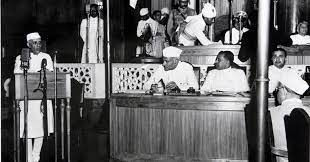
The issue of the respective powers of the Central Government and the states was a major point of contention during the deliberations of the Constituent Assembly of India. While some members advocated for a strong Centre, others argued for greater autonomy for the states. Ultimately, the Assembly chose to adopt a Constitution that gave significant powers to the Central Government, albeit with some provisions for the states.
Jawaharlal Nehru, one of the proponents of a strong Centre, argued that in post – partition India, it was necessary to ensure peace, coordinate matters of common concern, and represent the country effectively on the international stage.
This view was supported by other members, who pointed to the need for a strong central authority to manage the country's diverse population and forestall chaos. The violence that had erupted in the wake of Partition also pushed many members towards centralisation.
Some members of the Assembly, like K. Santhanam from Madras, felt that this allocation of powers would cripple the states. He argued that most taxes, except land revenue, had been made the preserve of the Centre, leaving the provinces impoverished and unable to undertake development projects. K. Santhanam felt that a reallocation of powers was necessary to strengthen not only the states but also the Centre. He argued that by relieving the Centre of some of its functions and transferring them to the states, the Centre could actually be made stronger
Despite these arguments, the Assembly ultimately chose to adopt a Constitution that favored a strong Centre. The Draft Constitution provided for three lists of subjects: Union, State, and Concurrent. There were more items placed under exclusive Union control than in other federations, and more placed on the Concurrent list than desired by the provinces, making centre all powerful.
The Centre had control of minerals and key industries
Article 356 gave it the power to take over state administration on the recommendation of the Governor making centre very powerful.
The Constitution mandated a complex system of fiscal federalism. Some taxes, such as customs duties and Company taxes were retained entirely by the Centre, while others, like income tax and excise duties, were shared with the states. Still, others, such as estate duties, were assigned wholly to the states.
The states were also allowed to levy and collect certain taxes, including land and property taxes, sales tax, and the tax on bottled liquor.
In conclusion, the Constituent Assembly of India chose a strong Centre for several reasons, including the need for national security and economic development. While the Constitution did provide for some level of autonomy for the states, it also favored the Centre in many areas.


Comments